Julius Caesar
Metamorphoses (Ovid Edition)Julius Caesar stands at the culminating threshold of the poem’s movement from mythic transformation to Roman political memory. He is presented not merely as a mortal ruler whose career has ended, but as a figure whose violent death becomes the occasion for apotheosis: his wounded spirit is carried from the world and changed into a star. Through him, Roman history is absorbed into the poem’s larger theology of change, while his deification prepares the way for the exaltation of Augustus and the imperial destiny of Rome.
Identity and Historical Position
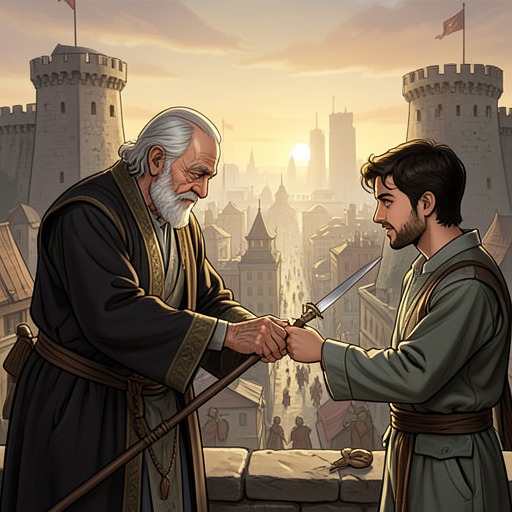
Julius Caesar appears in the fifteenth book, whose subjects include Numa, the doctrines of Pythagoras, Hippolytus, Asclepius, and the apotheosis of Julius Caesar. His appearance therefore belongs to the work’s final historical and philosophical movement, after the earlier books have ranged across divine myths, heroic sufferings, bodily transformations, and the origins of peoples and cities. The placement gives Caesar a distinctive status: he is both a person within Roman history and the last great mortal to be translated into the divine order before the poem turns toward its epilogue.
The poem also places Caesar within Rome’s expanding political horizon. The Roman state is described as growing, and the surrounding narrative looks toward the destiny of a world contained within Rome. Caesar’s significance consequently exceeds his individual biography. He becomes a point at which the poem’s mythic past, Roman foundation stories, and imperial future converge.
Death and Portents
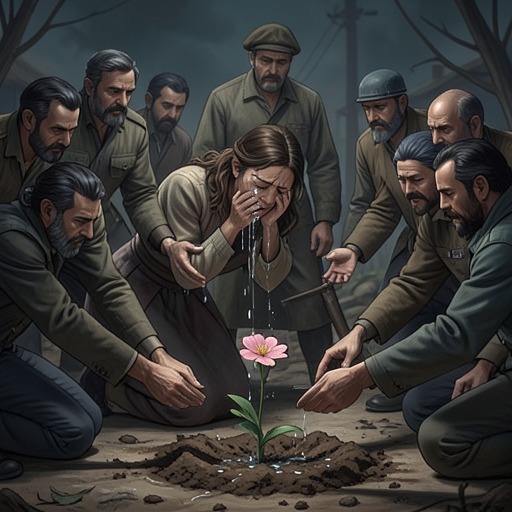
Caesar’s end is announced through a landscape of ominous disturbance rather than narrated as an isolated private death. The text declares that every omen points toward Caesar’s fate: night-howling dogs trouble the quiet around sacred shrines and temples, and the atmosphere of Roman religious space becomes charged with foreboding. The portents connect his death to the condition of the state, where dire wars and civil fury threaten Rome and sacrifices cannot appease the anger of the gods.
This presentation makes Caesar’s death simultaneously personal, political, and cosmic. The danger is not confined to one ruler; it reaches the city’s institutions, religious places, and civic peace. The omens imply that his fall belongs to a crisis in Roman order, yet they also prepare the transformation that will reconcile mortal violence with divine elevation. The poem thus frames the death as a passage whose meaning becomes visible only through what follows it.
Divine Ancestry and Apotheosis
The poem refuses to let so great a prince appear to have arisen from an entirely mortal stock. To establish his celestial dignity, it raises the status of his father toward the heavens and invokes the beautiful goddess who bore Aeneas. Through this connection with Aeneas, Caesar is placed within Rome’s sacred genealogical imagination: his line reaches back to divine ancestry and forward to the Roman state that descends from that heroic past.
His apotheosis is expressed through a precise transformation. His spirit, still fresh from his wounds, is taken away and changed into a star. The language preserves the trace of violence even as it removes Caesar from mortality. The wound is not erased; it becomes the condition from which the new celestial form emerges. Caesar therefore embodies the poem’s recurring principle that bodies and identities may change without simply disappearing. His mortal form is lost, but his presence is given a new and enduring location among the stars.
The transformation also changes Caesar’s political status. He assumes divine rites and is no longer remembered only as a dead ruler. His elevation authorizes ritual reverence, converts political memory into sacred memory, and makes the Roman leader legible within the same universe that contains gods, heroes, and other transformed beings.
Relationship to Rome and Augustus
Caesar’s deification is inseparable from the poem’s vision of Rome. The surrounding prophecy presents Rome as a power destined to gather the world within itself, while the Roman narrative recalls the succession of rulers and the growth of the state. Caesar’s celestial elevation gives this historical expansion a divine frame: Rome’s political history becomes part of a providential sequence rather than a merely human chain of conquest and succession.
The transformation also serves the poem’s praise of Augustus. By refusing to leave Caesar at the level of mortal origin and by lifting him into the heavens, the narrative creates a sacred bridge to the living or future imperial order associated with Augustus. Caesar’s star becomes a sign that Roman sovereignty can pass from history into cosmology. The ruler is not simply replaced; he is converted into an ancestor, omen, and celestial guarantee for the authority that follows.
Narrative Role and Significance
Julius Caesar gathers together the poem’s central motifs of change, death, lineage, and poetic preservation. Earlier transformations repeatedly alter bodies into plants, animals, stones, or stars; Caesar’s transformation gives the pattern its most explicitly political form. His body is subject to mortal violence, but his spirit escapes destruction through a new shape. The event therefore turns Roman civil crisis into an image of continuity.
His presence also clarifies the poem’s larger claim about endurance. The work announces that it sings of bodies changed into various forms and invokes the gods from whom such miracles spring. Near its conclusion, it declares that the completed poem need not fear storms, fire, war, or wasting age. Caesar’s star and the poem’s own hoped-for survival mirror one another: both pass from vulnerable mortal circumstances into forms intended to outlast ordinary ruin. Caesar receives celestial permanence, while the poem seeks poetic immortality.
For that reason, Julius Caesar is less a fully dramatized protagonist than the decisive historical figure through whom the poem closes its arc. His death gathers the darkness of civil violence; his ancestry supplies a divine genealogy; his wounded spirit becomes a star; and his apotheosis allows Roman power, imperial succession, and the poem’s faith in transformation to occupy one final, unified image.